

Why Everyone Is Suddenly Talking About Fascia For Glowing Skin

In an industry obsessed with actives, devices and injectables, could it be that we are missing a skin trick? It turns out that our body’s connective tissue – what experts call our fascia – holds real power when it comes to the structure and tightness of our skin.
A sophisticated and intricate web that wraps around every muscle, bone, organ and nerve, the fascia quite literally holds us together. The beauty landscape is often driven by speed and surface fixes, so taking a fascia-first approach feels radically low-key: slow down, breathe, reconnect.
This new skin philosophy relies on whole body movement and breath-work for clearer, brighter, more balanced skin.
We talk to advanced facialist and breathwork practitioner Joni Hodson-Ilias, also known as The Facelift Facialist, about how this overlooked tissue could just be the most powerful beauty tool we possess.
What is fascia?
Though it looks like a single sheet of tissue, fascia is actually multiple layers with a liquid in between called hyaluronan.
“Think of it as a living matrix, one that houses collagen, produces its own hyaluronic acid and allows for healthy movement and lymphatic drainage,” says Joni Hodson-Ilias, who is renowned for her fascia-first and nervous-system approach to skin health and rejuvenation.
This connective tissue system can act “like a report card that reflects our emotional state and how we move, feel and live”.
Symptoms of a fascia under fire
Fascia can dry up and tighten for reasons including limited physical activity, repetitive movement of a particular body part, or trauma from injury or surgery.
“If the fascia becomes unhealthy and restricted, then we can’t move as freely and our lymph can’t flow or drain effectively,” explains Hodson-Ilias. “Over time, that can show up on the face as puffiness, dullness, congestion and premature ageing,” says Hodson-Ilias.
A fascia first philosophy
Hodson-Ilias’ treatments begin not with the face, but with the person as a whole.
“I practise a fascia-first approach with myself and my clients as I like to look at the face as being part of the whole story of someone and not just what’s presenting on their face,” she says.
For example, “when someone comes to me with jaw tension because they clench or grind, a fascia-first approach considers that the tension didn’t necessarily start in the jaw but in the surrounding areas”.
Stress held in the shoulders, unspoken resentment, chronic fight-or-flight – the fascia keeps a record.
“This is the thing about reading someone’s fascia first; it can tell you someone’s emotional state, and from there we can respectfully help them come back to themselves through deep, restorative relaxation and breath,” says Hodson-Ilias.
Can a healthy fascia replace injectables?
So can a fascia-first approach reduce reliance on injectables? “Yes, I would say it can,” says Hodson- Ilias.
“Because when fascia is hydrated and supple, it naturally supports the structure of your face. Working with fascia helps maintain lift and tone, improves elasticity and keeps circulation strong. Over time, this can extend the results of aesthetic treatments or even reduce how often you feel you need them.”
The nervous-system connection
At the heart of fascia work lies one crucial factor: the body feeling safe.
“Most people are overworked, lacking rest, stressed or burnt out, and as a result our nervous system is effectively stuck in survival mode or fight/flight,” explains Hodson-Ilias.
“Our body’s primary focus is not on keeping us looking youthful and glowing, but instead on keeping us alive.”
Releasing fascial tension “can communicate safety to the body via the help of the vagus nerve, which supports the body’s ‘rest and digest’”, she says.
This activation of the vagus nerve helps rebalance the nervous system, reduce stress responses and promote relaxation.
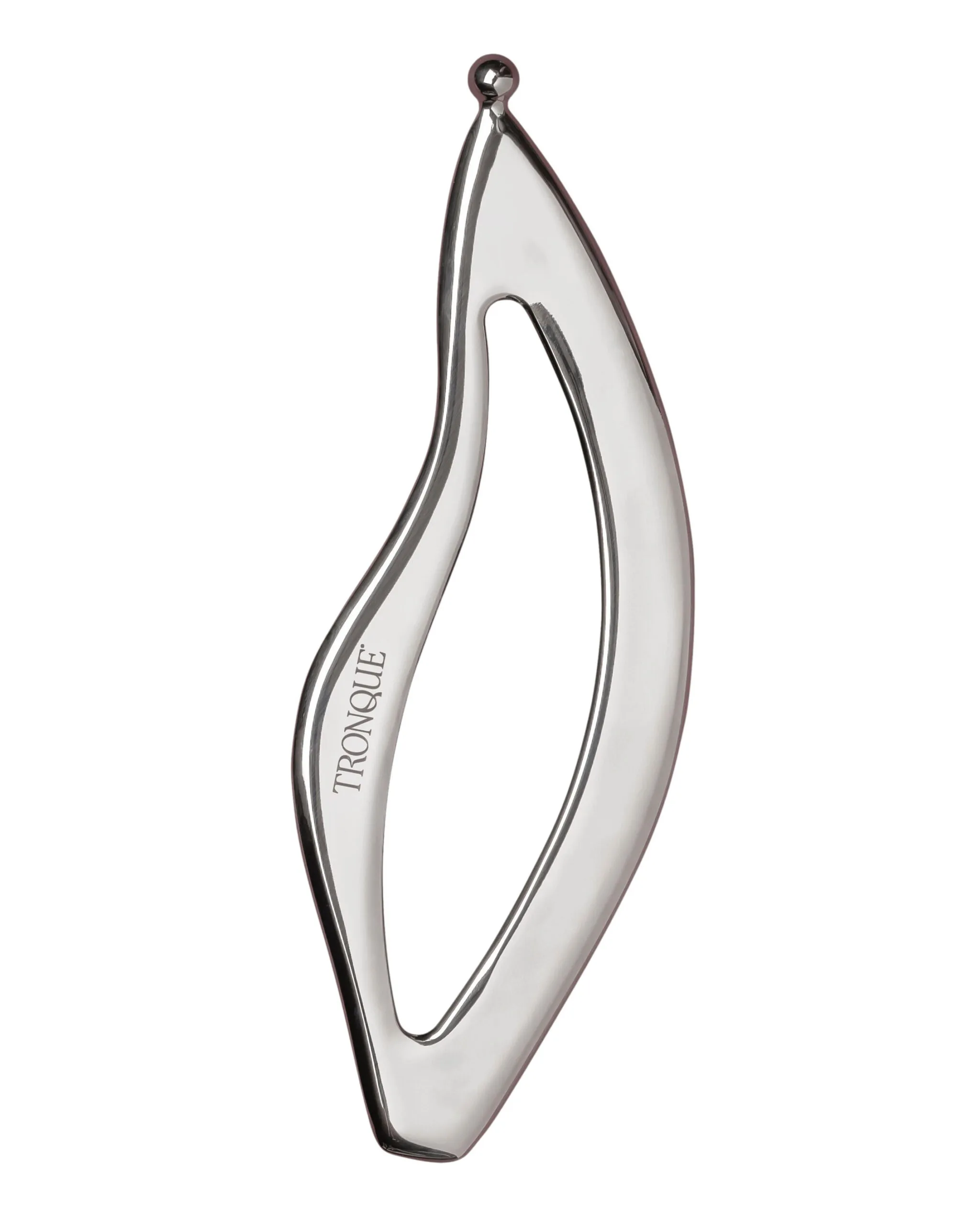
DIY fascia
“Fascia work doesn’t just change how you look, it changes how you feel,” explains Hodson-Ilias. “The jaw releases, the breath deepens and the face naturally softens.”
She advises starting with breath before anything else.
“Three intentional belly breaths followed by four cycles of box breathing – inhale for four, hold for four, exhale for four, hold for four – can help shift the nervous system out of stress mode.”
From there, intuitive movement, stretching, self-massage, gua sha or gentle cupping can help rehydrate and mobilise the tissue.
“You don’t need fancy tools. Your hands, your breath and your awareness are enough.”
Go to article
Leave a comment